Rules of Engagement (Design) — No. 02
The House Always Wins: Part 1
“Moments are the elements of profit.” Karl Marx, Capital, Vol. I (on the capitalist framework of time)
The first time I went to a casino was when my husband and I were on our mini-honeymoon in Palm Springs, CA. The contrast between the glaring 2pm desert sun and the inside of the grand palais was so stark, like night and day, that I had felt like we had entered a different world. I immediately noticed that there were no clocks. Other than the two of us, there were a few older patrons in the rows of slot machines, organized almost like a vineyard, sitting slouched on their stools, in a trance, slackjawed. I noticed one woman in particular who, with one hand, navigated the touch screen buttons with the speed and precision of a concert pianist. In her other hand, a lit cigarette. She was so focused on the machine that she didn’t notice the one-and-a-half inch strip of ash about to fall onto the floor.
After cashing out from a long series of successful roulette runs (beginner’s luck), I saw the same woman with the cigarette. She had not moved for the two hours we had been there. Her eyes had glossed over. I’ll always remember the look on the woman’s face, because it was the look I recognize in the faces absorbed in their phones today–passengers on the bus, people walking down the street, couples sitting across from each other at restaurants. I didn’t make the connection at the time, but to varying degrees, we all suffer from this affliction: stuck in a loop through methods engineered to hold their brains hostage. We all have become Odyssean Lotus Eaters, and for many of us, the temptation of ignorant bliss consistently overpowers the challenge of addressing in the present moment.
On Last Week’s Episode…
In my last piece, I covered the main principles of engagement design, where they came from, and a rough outline of how they’re used in our digital products today. For those who need a brief refresher: variable rewards is the principle in which an action that leads to an unpredictable payoff increases persistent behaviors. Engagement design enthusiast Nir Eyal thinks “variable rewards are one of the most powerful tools companies implement to hook users,” (Hooked, pg 8).
Based on my research, I, too, consider it to be one of the most load-bearing pillars of engagement design. Psychologist Patrick Anselme proposes that variable rewards systems have long exploited neural mechanisms that evolved to motivate exploration and persistence in environments where resources were unpredictable. Eyal splits variable rewards into three forms: the Tribe, the Self, and the Hunt. (Hooked, pg 99) Rewards of the Hunt is likely the mechanism that drove humans to search for resources—mainly food. For most of human existence, investing energy in finding food didn’t always lead to success. Sometimes, you’d catch a fish, you’d find a berry bush, or maybe even snag a deer if you hit the jackpot. Sometimes, you wouldn’t find anything at all. If you’ve ever been to a casino, you know (probably) exactly how your ancestors felt.
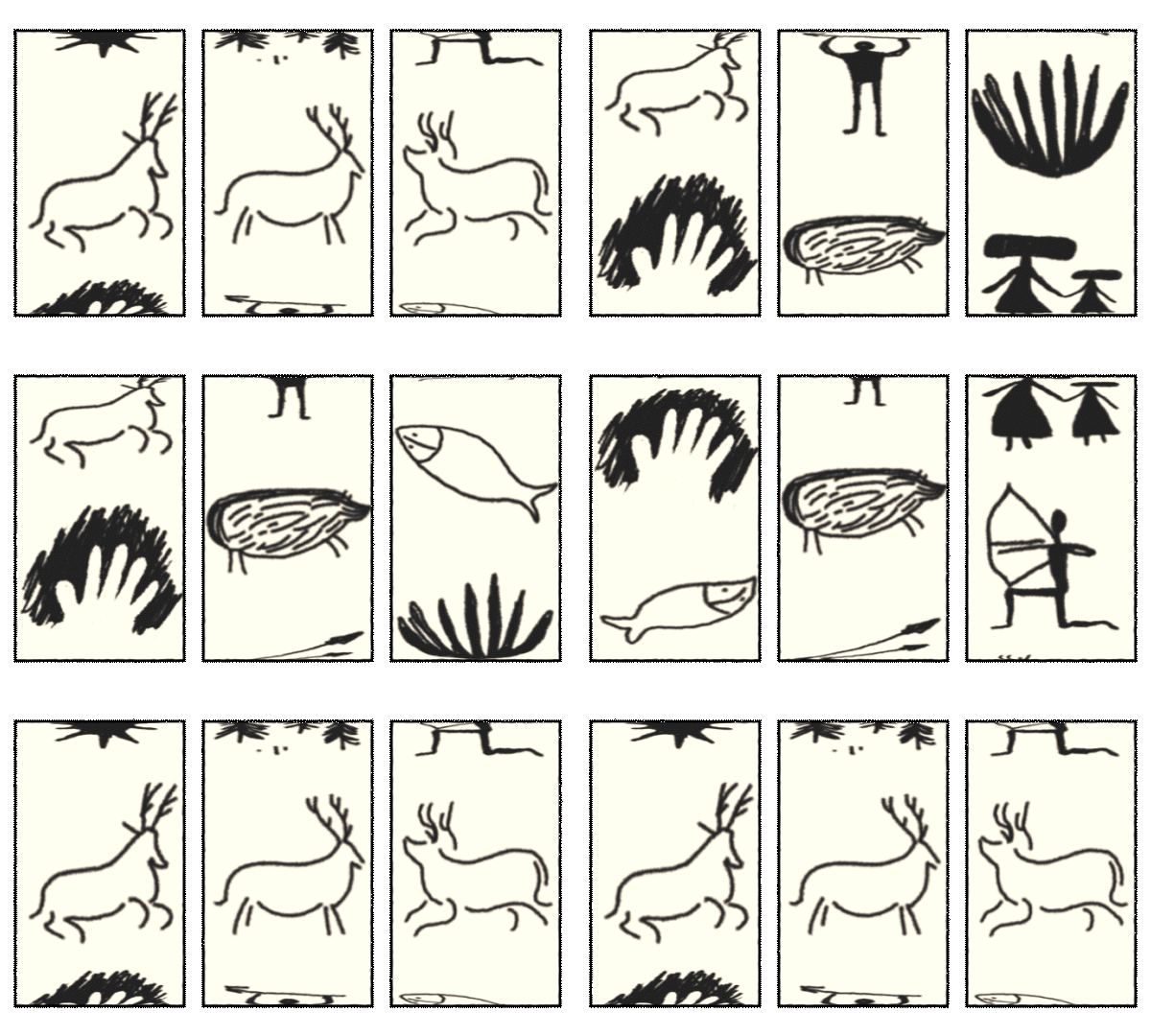
What Players Want
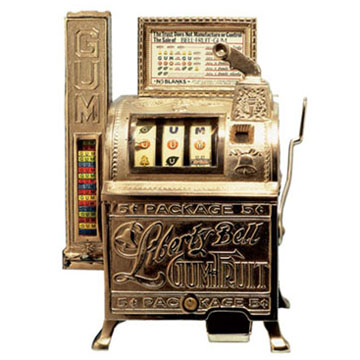
The lineage of variable rewards in products traces all the way back to the first slot machine: the Liberty Bell, invented by Charles Fey around 1895.1 At the time, gambling was seen as wasteful or unproductive, and was even outlawed by some places amid concerns about its association with moral vice. It did not “produce,” at least not in the way manufacturing or labor did. Even within the marginal world of gambling, slots were originally placed in marginal areas. They sat in the periphery of green felt tables primarily to “occupy the female companions of the ‘real gamblers’.” (Addiction by Design, pg 4)
For decades, they lived in transitional areas, such as elevator halls and reception areas and didn’t even have seating. (ABD, pg 4) However, by the 80s and 90s, casinos began to recognize the commercial value of their female and elderly clientele. (ABD, pg 5) The industry started pouring more resources into the machines that have ultimately become their main attraction. By 2003, it was estimated that slot machines were generating over 85% of gambling industry profits. (ABD, pg 5)
Researcher Natasha Schüll has studied casinos for decades, particularly slot machines. In recent years, she has made connections between the design of slots and engagement design in tech, even noting in her most recent edition the increase of companies reaching out to her, wanting to use the “techniques for maintaining attention” for good. (ABD, pg XIII) In her book Addiction by Design (Princeton University Press, 2012), Schüll explores the complex relationship between addiction and machines, casino spaces, their marketing tactics, the evolution of slot machines over the course of 20 years, and the behavioral engineering behind them.
Around the mid-90s, Schüll observed that the main goal of casinos was to maximize player “productivity.” (ABD, pg 58)2 The key to casinos keeping asses in seats was to eliminate every conceivable barrier between the player and their session. (just short of eradicating the need for restrooms, but who knows what kind of bathroom-related innovations the industry is exploring at this very moment?)
The first step in removing friction in the player experience was to add bill-validators so players wouldn’t have to pause, shuffle through their pockets, and insert more coins. (ABD, pg 71) In the early 2000s, the TITO system (ticket-in, ticket-out) was widely deployed and was the turning point that began making gaming truly frictionless. (ABD, pg 69) Casinos even started putting ATMs into the slot machines themselves. (ABD, pg 72) A gambler from Schüll’s book remarks: “When you interact with these machines… it induces a kind of disconnection from reality and real money can subtly morph into play money.” (ABD, pg 71)
In her book, Schüll recalls a WMS ad campaign from 2006 called “What Players Want.” She remarks: “The point of the campaign was clear: in order to immerse gamblers in the experience of play and thereby increase their productivity, it was essential to augment slot machines’ ‘affective grip’… by establishing a congruence between machine functions and the human sensorium.” (ABD, pg 60) Machines were now being designed to accommodate the player rather than the other way around—not only eliminating friction, but manufacturing impulse and desire.
Over time, designers increased their palette from 256 colors to millions of distinct colors. (ABD, pg 60) The number of sound effects went from as few as fifteen per game to an average of four hundred. (ABD, pg 61) Sounds were enhanced, blended, and softened to appeal to the human ear. A longtime gambler even tells Schüll “Last weekend the sounds were turned off on a machine I was playing, and even though it wasn’t playing bad, I switched because I couldn’t handle playing a silent machine—it didn’t have the same flow to it.” (ABD, pg 61) Over time, vibration and haptics were also introduced to the experience. (ABD, pg 63) Developers created technology that would respond to every touch, “giving players a ‘definitive transactional confirmation’ for every action they take, creating a ‘more intuitive, natural, and multisensory experience that keeps them playing longer.’” (ABD, pg 63)
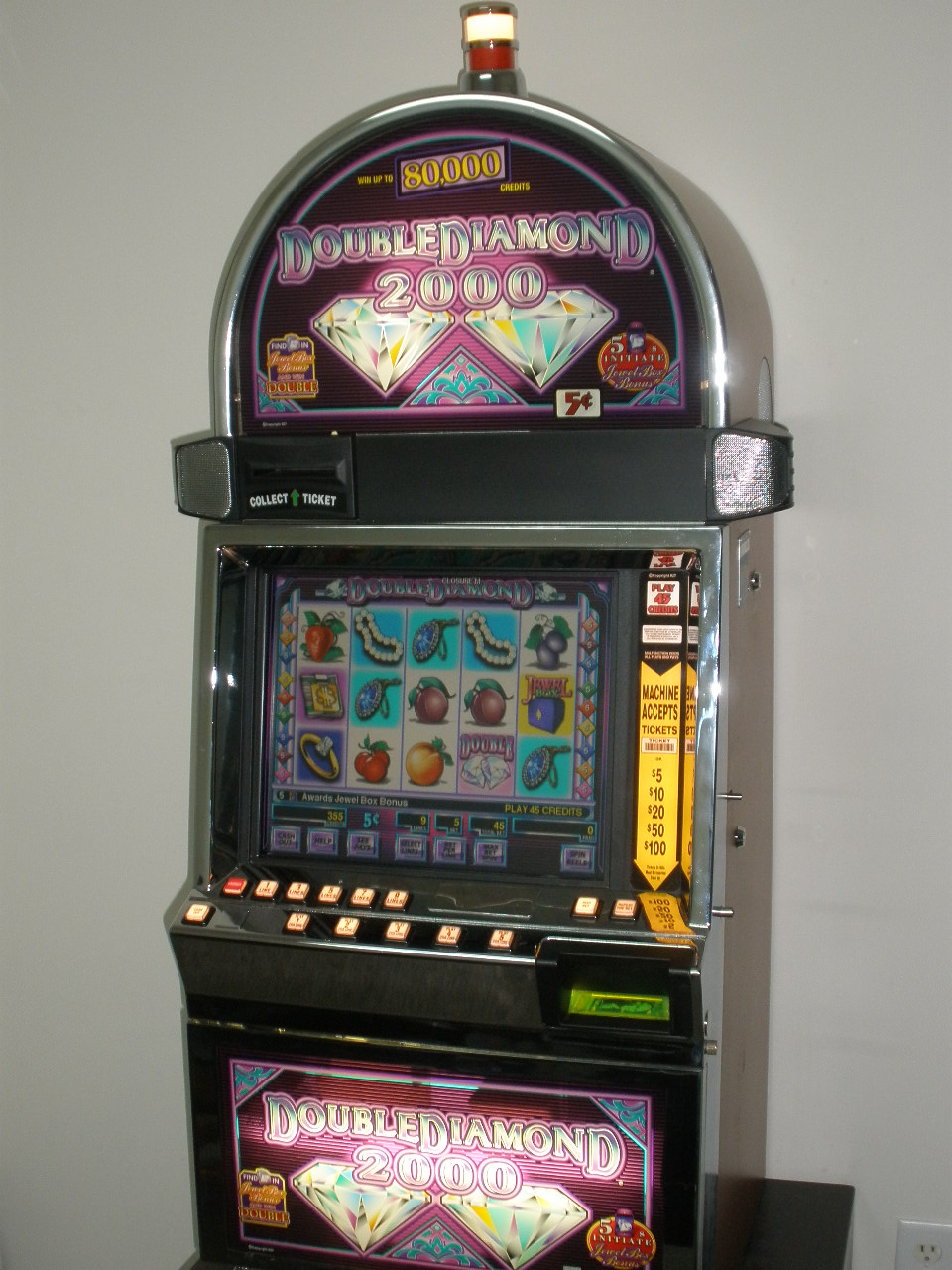
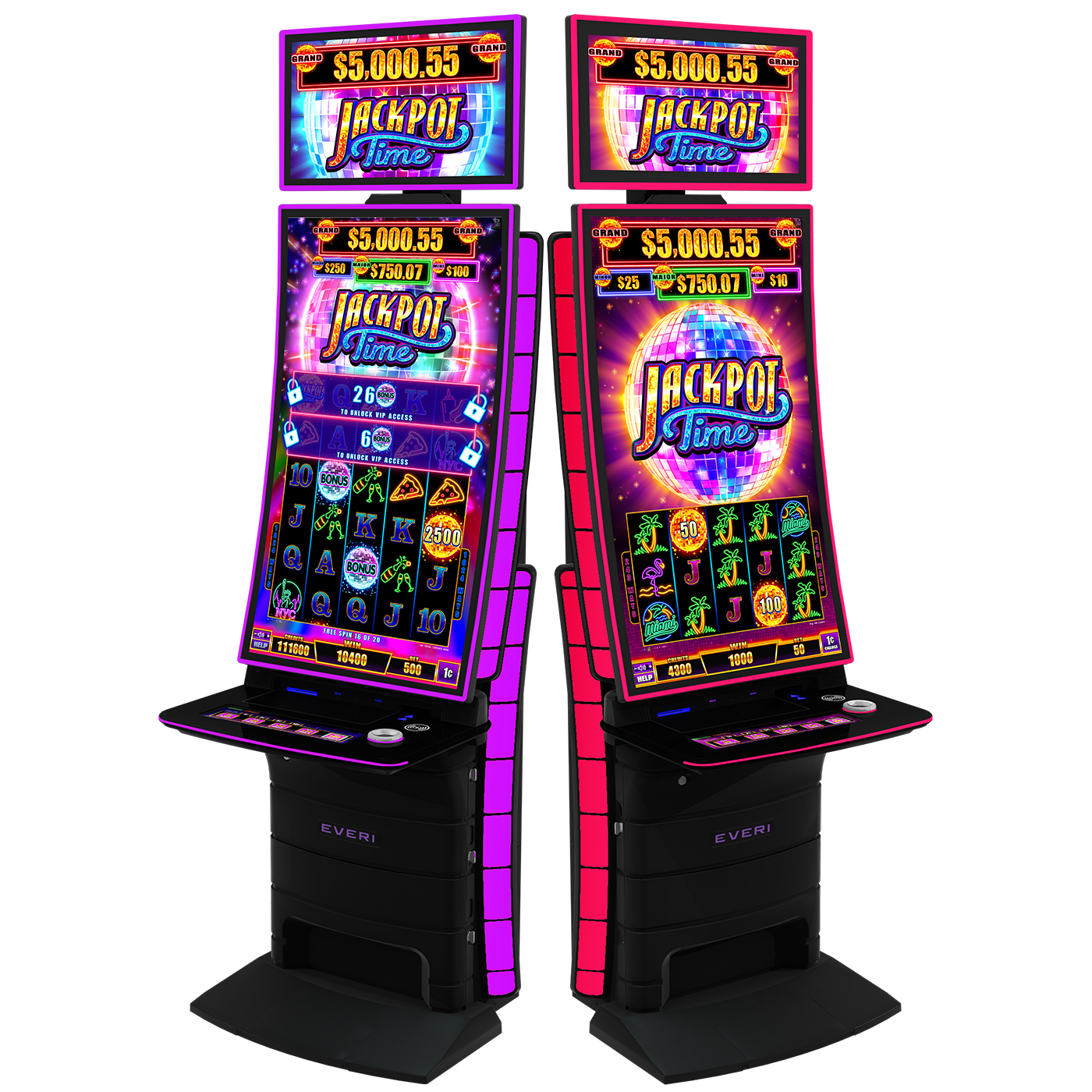
Right: IGT-Everi “Jackpot Time” Slot Machine Cabinets, 2025
Play Fast, Pay Faster
No matter what Steve Jobs’ intentions may have been, he managed to invent the world’s tiniest portable slot machine. Many apps, not just games, use slot-machine-like systems: press the button or pull down the page, new information comes out. Not knowing what comes next in their feed is the carrot and stick that keeps users hooked, new information has become our Reward of the Hunt. In this piece and the next, I want to highlight a different digital ecosystem that I feel is overlooked in conversations about mainstream online engagement: the world of mobile gaming.
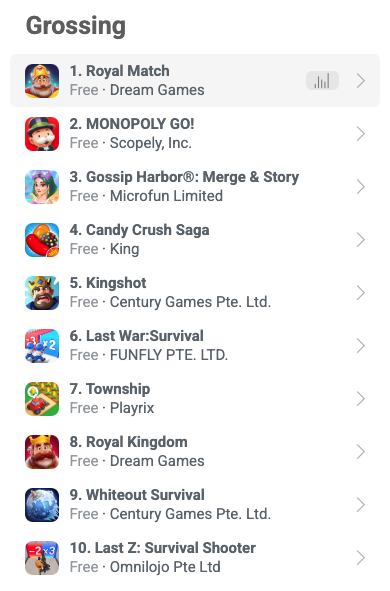
When I’m on the bus/train, at the airport, or in a waiting room, there’s always someone playing their mobile game at full volume. Even the phenomenon of law enforcement officers playing mobile games while on active duty has become a hilarious, recurring meme. The popular mobile games I am referring to have very specifically casinofied elements. Casinofication, as defined by me, is the implementation of variable-reward patterns paired with sensory-stimulating components and frictionless payment.3 Several popular free-to-play (F2P) games that use gambling mechanics (but aren’t classified as gambling) are some of the top grossing games in the iOS store. (as of June 2026)4 Similarly to slots, in mobile gaming, variable rewards is what keeps players in a death grip.
However, frictionless payment is what makes it so easy for users to keep playing, which the iOS store has been refining since it opened for business. In-app-purchases (IAPs) were officially introduced in 2009, which let the user keep a card on file under their Apple ID, accessible by typing in a password every time. (I know, difficult to imagine because everything is autofill / “remember this device.”) Within the next six or so years, F2P games experienced rapid growth. In 2013, the body became the key—purchases could be made with a simple fingerprint (Touch ID), followed by scanning the user’s face (Face ID) in 2017.5
Right: Candy Crush Saga 2026
Transaction flows weren’t the only evolving components in mobile games. Like slot machines, the slow metamorphosis from “casual game to play in passing” to “money extracting dopamine machine” included appealing to the senses. As you can see in the video above, the difference between Candy Crush 2012 and Candy Crush Saga 2026 is staggering. More colors, richer design, more sounds, and more robust music: an all-around overwhelming more-ness. The most significant difference I noticed… the speed of play has substantially accelerated, leading to faster depletion of resources, pushing users to pay more in less time; thus, increasing their “productivity”.
Next time on Rules of Engagement (Design), we will be taking a closer look at a few of the top grossing games, the way they prey on user’s brains (and their wallets), the wild, wild west that is F2P regulation, and what this means about our culture in a broader sense. Stay tuned for part two! Thank u so much for joining me :-)
Footnotes
-
Bell of the Ball
Charles Fey, a Bavarian-born mechanic who immigrated to San Francisco, invented the first slot machine, named the Liberty Bell. The first machines had symbols derived from the poker suits (diamond, heart, spade), added the horseshoe, star, and cracked Liberty Bell, and had up to 1000 different combinations. Fey is also commonly credited with inventing the “jackpot,” aka when the player hits a winning combination, and the machine pays out all the money accumulated inside of it. (the term “jackpot” itself originated in poker.)
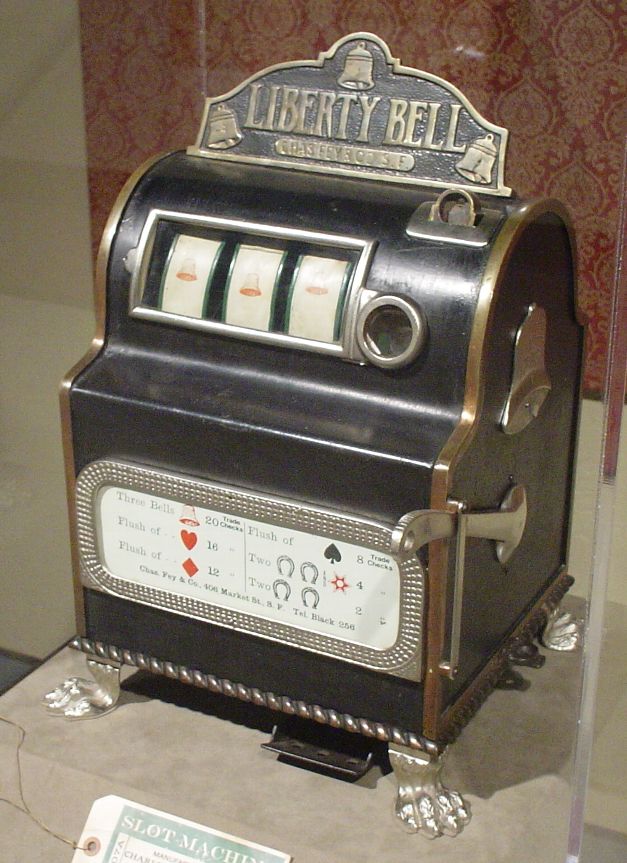
Unfortunately for Fey, California courts wouldn’t grant any patent protection for a machine used for nefarious purposes like gambling. When big firms and manufacturers offered to buy him out, he declined every time. Fey tried to maintain secrecy by installing his machines in Bay Area saloons himself on a 50-50 split with the businesses he put them in.
Fey was able to keep his operation tight, but it was not to last, as such a profitable device is destined to spread in the name of innovation and enterprise. In 1907, Mills Novelty Company had successfully reverse-engineered the machine and produced their knock off, the “Mills Liberty Bell.” After that, it was a free-for-all.
In 1909, San Francisco—where Fey was based—banned slot machines. The ban targeted machines that paid out cash, so he and his imitators came up with a clever way to circumvent the law: swap the money payout for fruit-flavored gum (Imagine putting money in a vending machine and only getting what you want like, 10% of the time lol). To really sell this idea, they changed the card suit symbols on the reels to the fruit gum flavors (cherries, lemons, plums, melons) and added the BAR symbol, the Bell-Fruit Gum logo. The fruits you see on slot machines today are relics of the first regulatory dodge.
In 1931, gambling was legalized in Nevada, the first of many governments to turn to gambling-related revenues as a pragmatic measure during economic hardship (hmmm sounds familiar…). As working hours fell and people had more income and more leisure time, gambling became a more acceptable form of entertainment. Between the 60s and the 90s, many jurisdictions legalized state lotteries, expanded casino gambling, and promoted gambling as a source of jobs, tourism, and tax revenue. Gambling, once deemed wasteful and morally dubious, became its own booming, and more importantly, legitimate industry.
Fey made a comfortable living running his own operation, yet the ones who ended up making a fortune were the copycats. Due to the taboo associated with gambling in the early 1900s, he received no press and little recognition during his life. The man who managed to build the money-extraction machine of a lifetime was unable to extract the value of his own invention and become a captain of the industry that currently rakes in billions. ↩
-
Tomato, To-mah-to
In her book, Natasha Schüll uncovers a lot of the terminology industry professionals use. She quotes casino management consultant Leslie Cummings:
“While the term ‘productivity’ often refers to measures such as output per worker… gaming productivity refers to wagering action (play) per patron per interval. Expediting refers to advancing and facilitating gaming action so that players can be more productive because their play is faster, extends for a longer interval, and/or involves more dollars placed at risk (wagered) per period than otherwise would be expected.”
This differs from the typical definition of productivity, where in Marxist terms, the “productivity of labour” refers to “the same quantity of labour yield[ing], in a given time, a greater or smaller quantity of the product, depending on the degree of development attained by the conditions of production.” (Capital, pg 655). Though Marx comments on increased productivity leading to more output and lowered value, both definitions seek to extract as much value from a worker (as the gambler IS a worker, in the sense that their play provides data to be used for further development by manufacturers) in a given amount of time. To increase productivity, casinos focus on “expediting”—another industry term—to speed up transaction processing and gameplay efficiency.
The borrowing and recycling of practices between the casino industry and the tech industry is already well documented. While reading Addiction by Design, I couldn’t help but notice the parallels in terminology. Here, I’ve provided a table showing terms that overlap and terms that are blatantly used across both fields, some in specifically F2P game circles:
↩Gambling Industry Engagement Design (Tech) Player: person gambling User: person using the product Productivity: wagering action per patron per interval Engagement: user time / interaction / returns Repeat Players: habitual players (more time than money) Power Users: heaviest users Transient Players: infrequent players, tourists Casual Users: use product sporadically High Roller (a.k.a. Whale): biggest spenders Whale / dolphin / minnow: F2P spending tiers, directly co-opted from the gambling industry TOD: “Time on Device” “Session length,” “sessions per day,” “time-in-app,” “dwell time”: industry metrics for time on device/platform Hold: % the house keeps Take Rate: a platform’s cut from each transaction Theoretical player value / Theo: value based on the theoretical revenue a player is likely to generate LTV (lifetime value): monetary valuation of a user Reinvestment: comps returned to a player to keep them returning Retention / re-engagement spending: money spent keeping or reactivating existing users Drip-feed / grind / dribble-pay: steady, small payouts engineered to keep play going Compulsion loop, variable-ratio rewards, daily bonuses: a repeating action-reward cycle driving continued product use ADT: “Average Daily Theoretical” — a player’s value to the house per day ARPDAU: average revenue per daily active user Churn: money turnover Churn: user turnover Player Tracking System: players-club system that monitors play and rewards loyalty CRM / behavioral analytics / loyalty: tracking user activity, rewarding loyalty -
Two Sides, Same Coin
At the time I “came up with this term,” I was unaware it was already used, but it makes sense, given that our country is generally going in a “casino-based” direction. The term “casinofication” was used in an article about cryptocurrency in the Harvard Technology Review, an online publication run by Harvard students. The way in which the author, Joe Ewing, uses the word is to describe the way crypto is associated with gambling-adjacent speculation/leverage/hype/get-rich-quick behavior rather than its practical uses. In the context of my piece, I am using it to refer to elements of slot machines (variable rewards, targeted sensory elements, frictionless payment) that have been implemented in non-gambling tech interfaces. ↩
-
The Top Dogs
These are the top ten grossing games in the iOS store as of June 24, 2026 according to appfigures.com. I make the claim that the majority of them have gambling elements, usually variable rewards in the form of sticker packs, loot boxes, and RNG (Random Number Generation) to name a few. This is a big claim, so I ended up playing them all myself to make sure. One of the reasons I had to split the piece in two was partly because it was over 3,500 words, but another reason was because I wanted to let my experiences with these games breathe in the footnotes. Because they are fucking bonkers!!
 ↩
↩
-
The Window of Opportunity
Interestingly enough, there was a point where friction was added back to the checkout process. In 2013, Apple’s password system had a 15-minute window. Once a password was punched in, there were no further barriers for the following 15 minutes. Inside that 15 minute window, children using either their own or their parent’s device managed to rack up insane bills on their parent’s tab—anywhere between 99 cents to $99.99 per in-app charge. One little girl was reported to have spent $2,600 in the app “Tap Pet Hotel”. Woof. After receiving so many complaints, the FTC made Apple tighten up the consent forms in 2014. Oh, and refunded at least $32.5 million to parents. (lol) ↩
Disclaimer: I used Claude AI as a research tool for this piece (basically as a more advanced search engine) and all resources have been vetted by yours truly. Every thought, argument, and word is my own.
Subscribe to receive emails ONLY when new articles drop xoxo